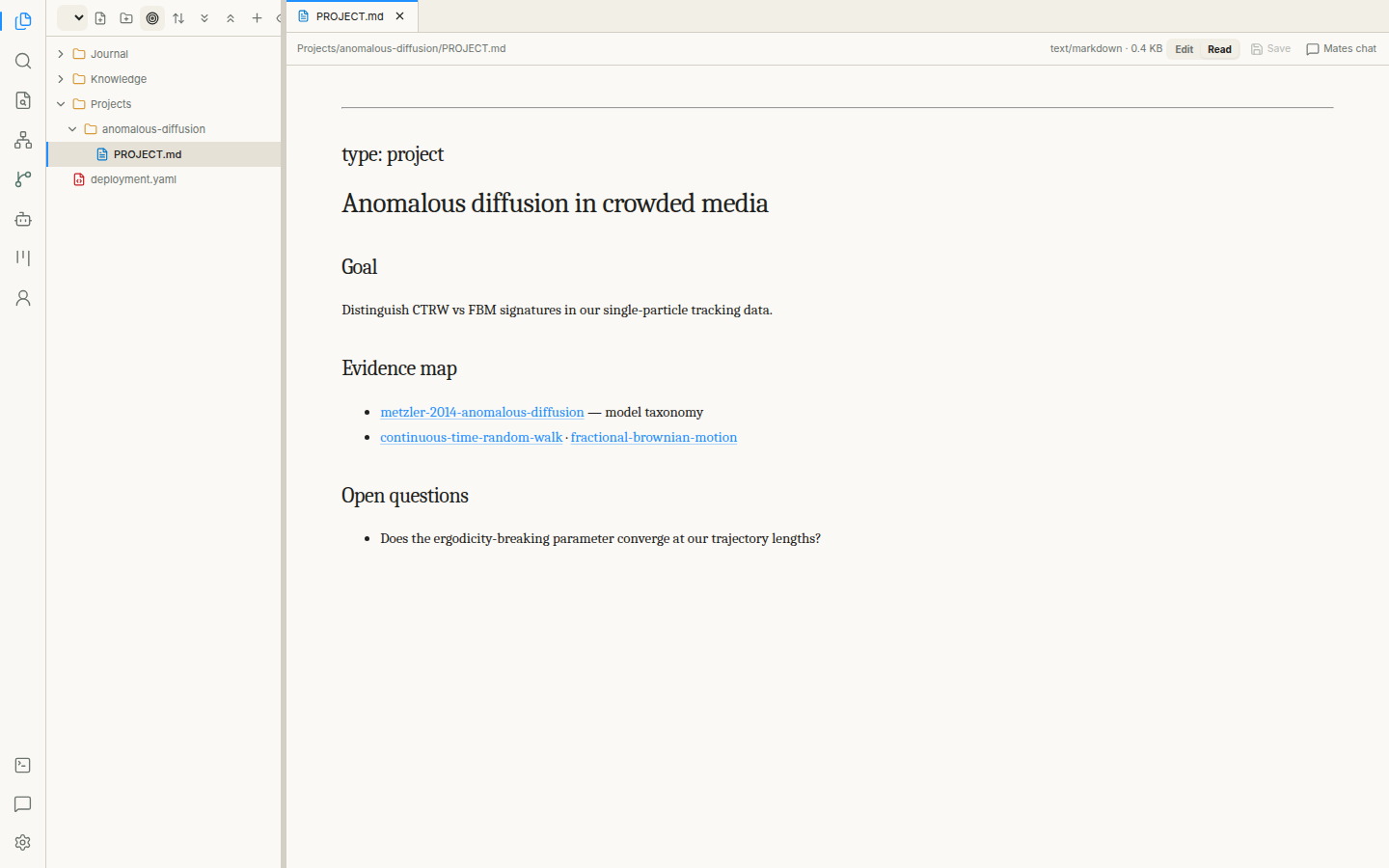
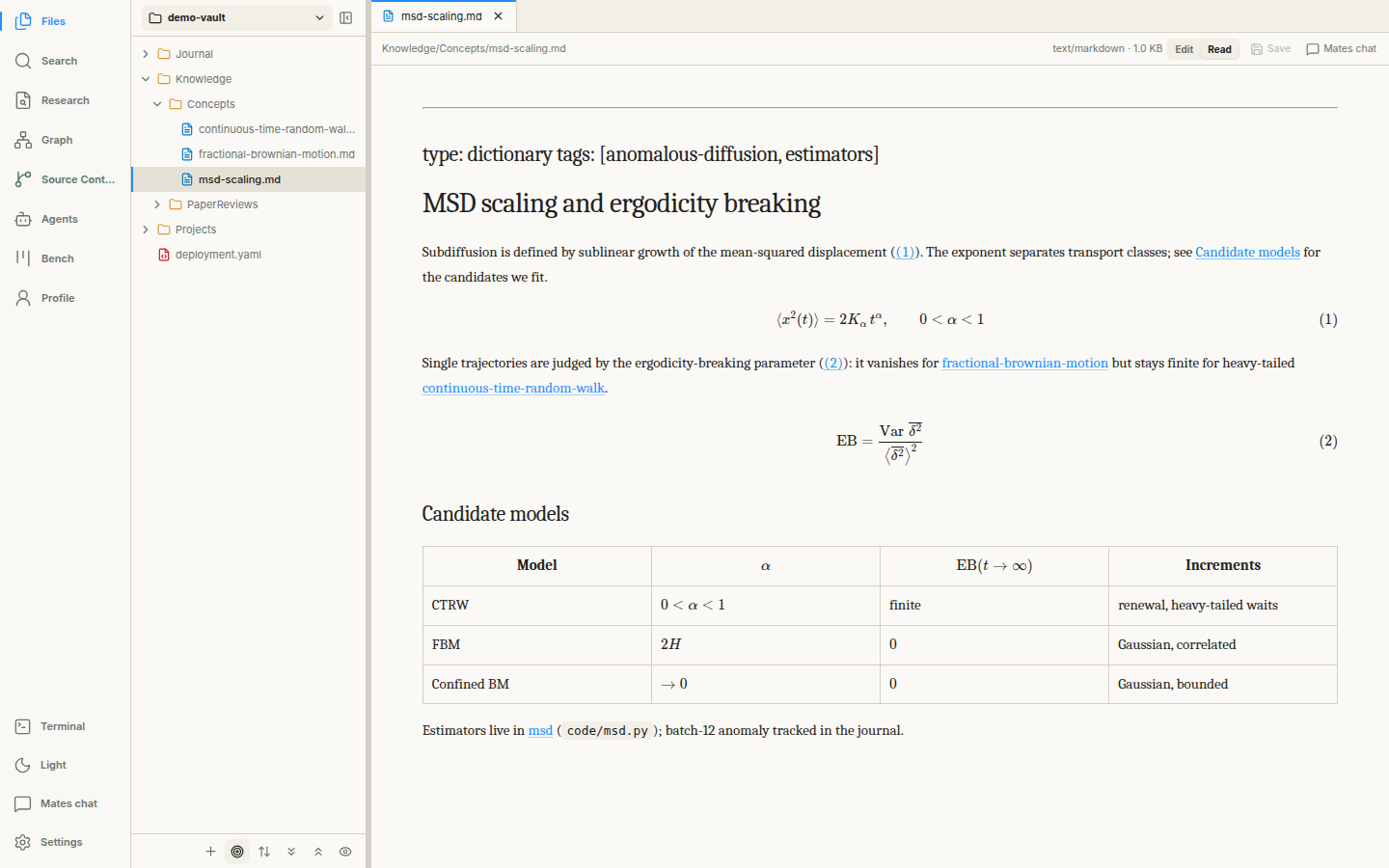
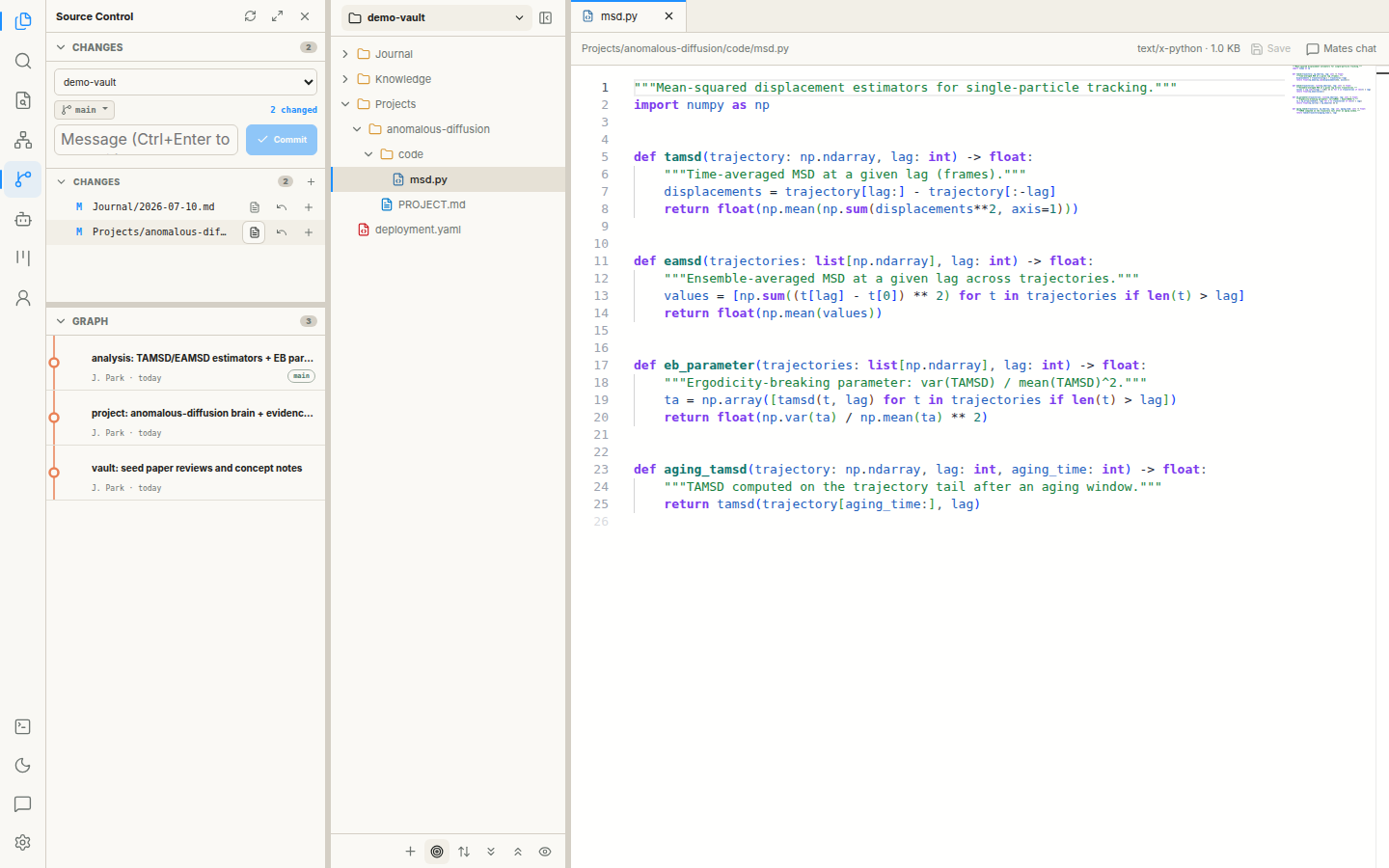
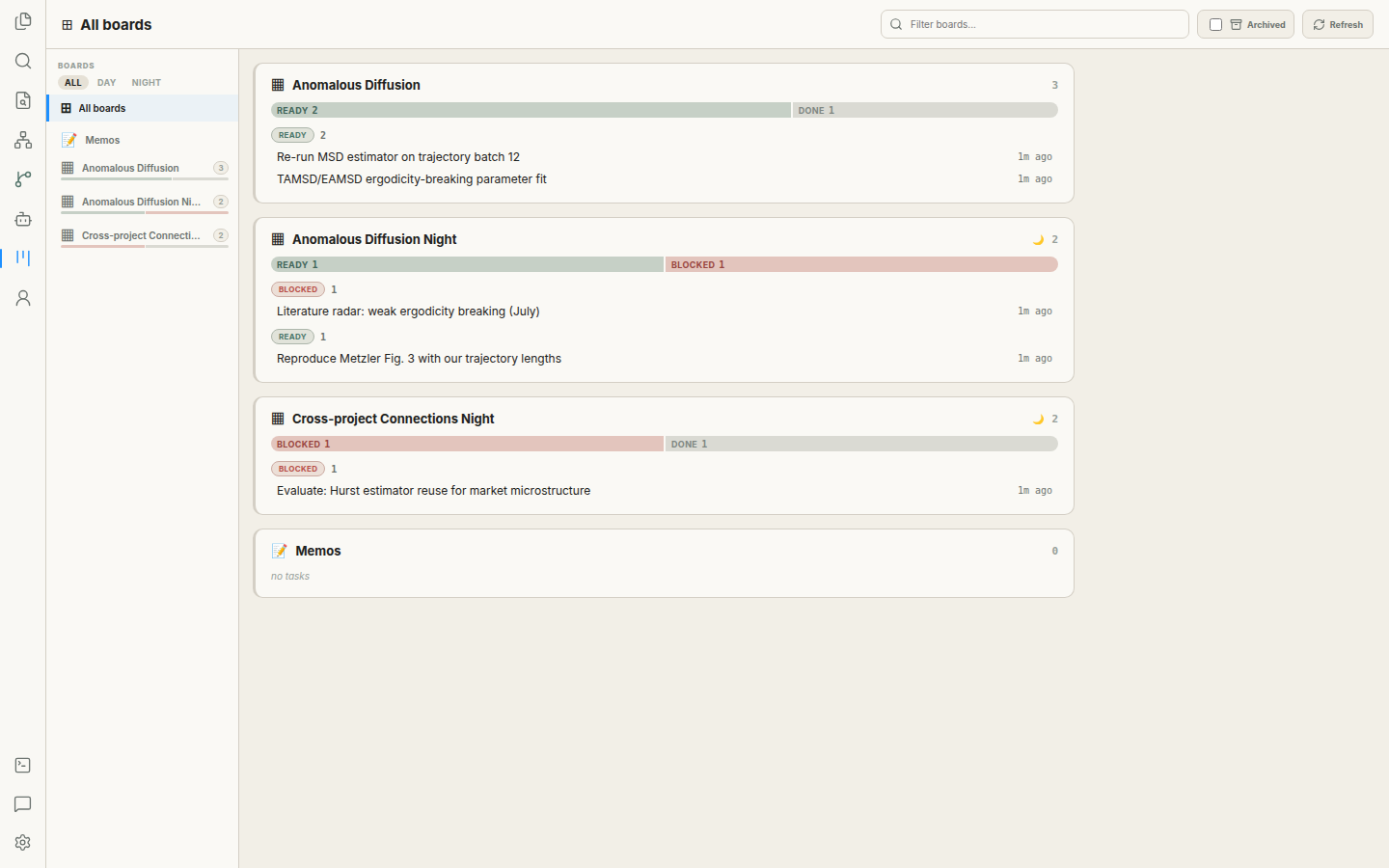
Open your existing research folder.
Markdown, code, data, and Git repositories stay where they are. Asterelle reads their project boundaries and relationships.
Research environment for people and agents
Pick up any research project without spending hours reconstructing the context.
A personal research superapp · Keep your Markdown and Git repositories · macOS, Windows, and Linux
Not a new file format or another chat history. Asterelle keeps project context, AI work, and human decisions together.
00 · The workbench
Notes, code, equations, Git, task boards, and research agents remain connected inside a visible project boundary.
01 · How it works
There is no proprietary import step. Asterelle reads the workspace you already have and connects it to the next decision.
One morning with Asterelle
Open an analysis project you paused last week. Observatory gathers the recent changes and overnight verification results. Inspect the Git evidence, delegate the follow-up to a Mate, and promote only the result you trust into the project record.
Markdown, code, data, and Git repositories stay where they are. Asterelle reads their project boundaries and relationships.
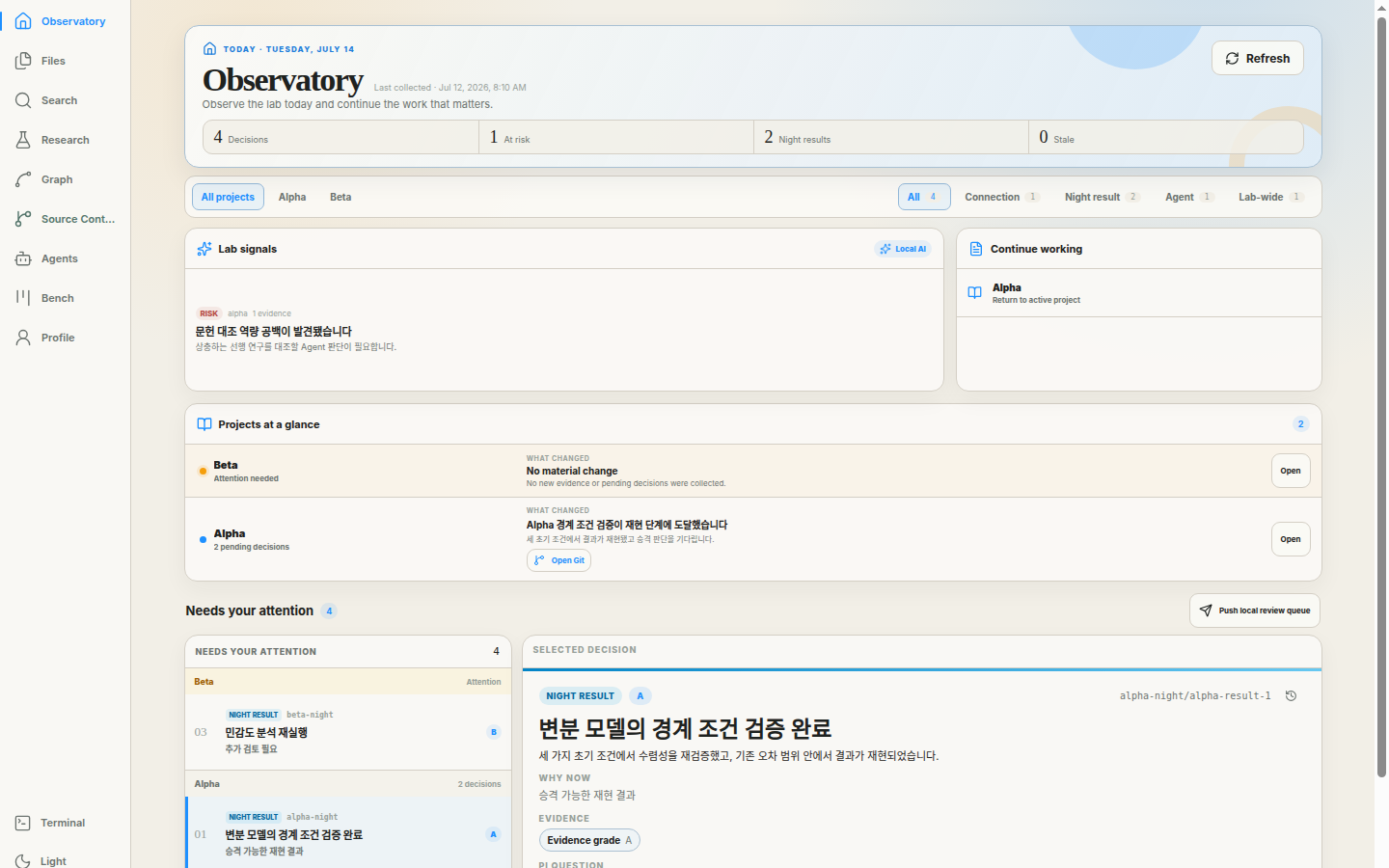
Observatory brings project changes, blocked work, overnight results, and pending decisions together with their evidence.
Continue in files, notebooks, and terminals, or give Mates a bounded task inside the active project.
Inspect the proposed change, execution history, file and Git evidence, authorship, and verification state in one review item.
Only approved candidates enter the canonical research state. Rejections and deferrals remain part of the decision history.
02 · One research system
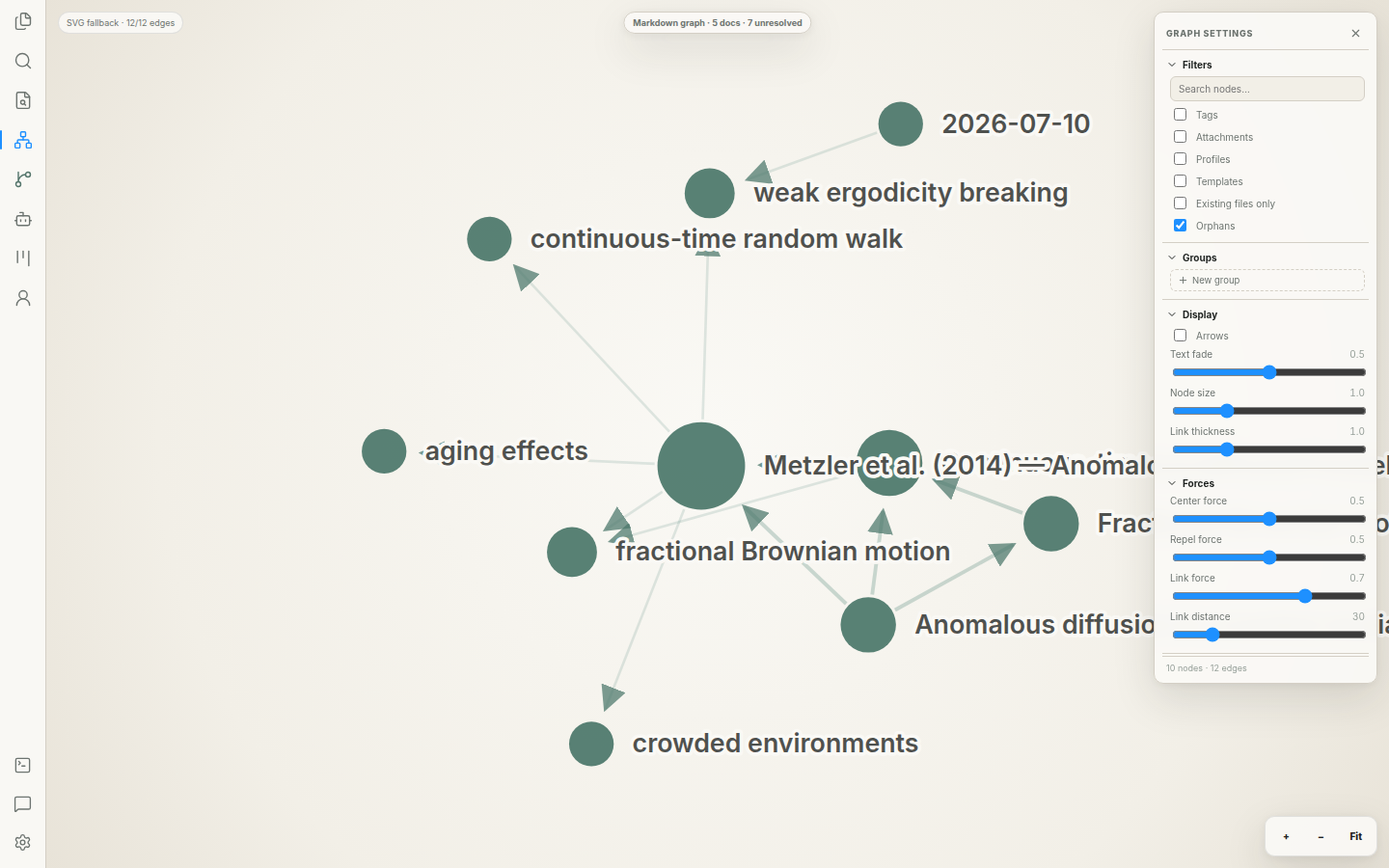
ConstellationSee how ideas and evidence connect.
Map relationships among papers, concepts, methods, claims, and projects from links already present in Markdown. Indexes are rebuildable; source notes remain plain files.
Files & WorkbenchKeep reading and execution close together.
Scientific Markdown, code, notebooks, terminals, Git, and task boards follow the same project boundary. Scope stays visible in both local and SSH workspaces.
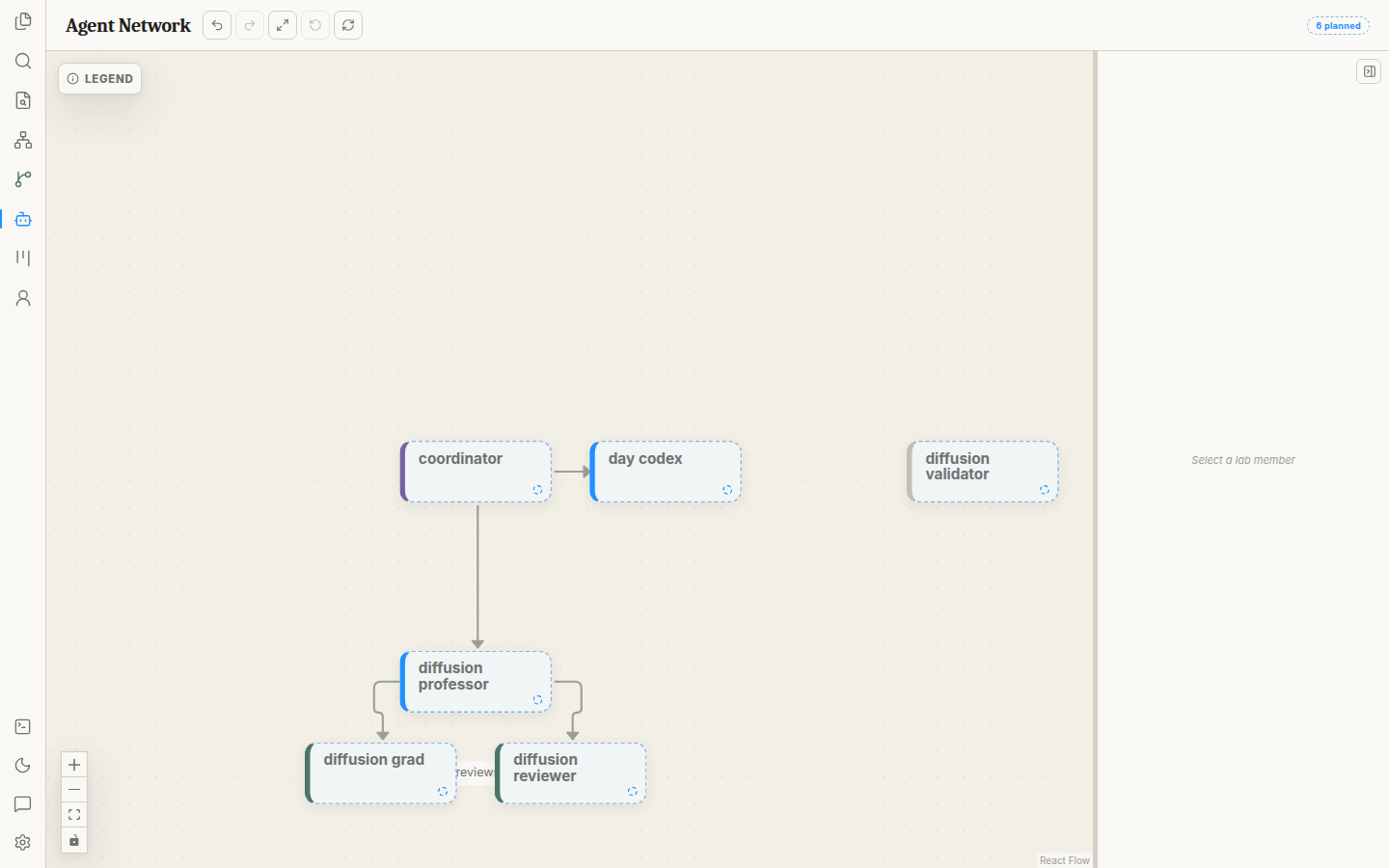
MatesResearch collaborators with visible roles and relationships.
Project agents prepare, review, and verify through explicit delegation paths. Progress and execution history persist beyond the conversation.
ObservatoryBring today's decisions into one place.
Signals, overnight results, and connection candidates from every project arrive with evidence. No result enters through a silent automatic edit.
03 · One environment, many models
Bring the model access you already use. Asterelle routes configured roles through one project context, then applies the same evidence and review rules to every result.
01 / BRING
Connect existing Claude Code or Codex access and configured local or remote providers instead of committing the whole workflow to one model vendor.
02 / ASSIGN
Use different models for coordination, coding, reading, summarization, overnight preparation, and independent verification.
03 / CONTINUE
Changing the model does not discard the task, execution record, evidence references, or the project boundary.
04 / CONTROL
Keep routine or sensitive preparation local when configured, and reserve stronger remote models for the work that needs them.
Model availability and data handling follow the providers and locality settings configured by the researcher. Asterelle does not silently promote a fallback result into the canonical record.
04 · How it earns trust
05 · Private beta
Asterelle is being tested with a small group of individual researchers in real research workspaces. Tell us about your environment and we will send a suitable desktop build with a guided starting point.
06 · FAQ
Still have questions? Email us directly.
07 · Where Asterelle is going
These are directions under exploration, not current features. Personal, local-first workspaces will remain the foundation.
Exploring
Connect paper collection, metadata, citation, annotation, and a focused reading mode to research notes and writing.
Exploring
Capture provenance among claims, data, executions, and documents more precisely, with stronger reproducibility checks.
Exploring
Explore a collaboration layer for shared projects, reviews, explicit roles, and auditable decisions without giving up personal workspaces.
The roadmap is not a release commitment. Scope will follow researcher interviews and real-world validation.